Fears grow in Seoul of being sidelined in talks on North Korea's nuclear program
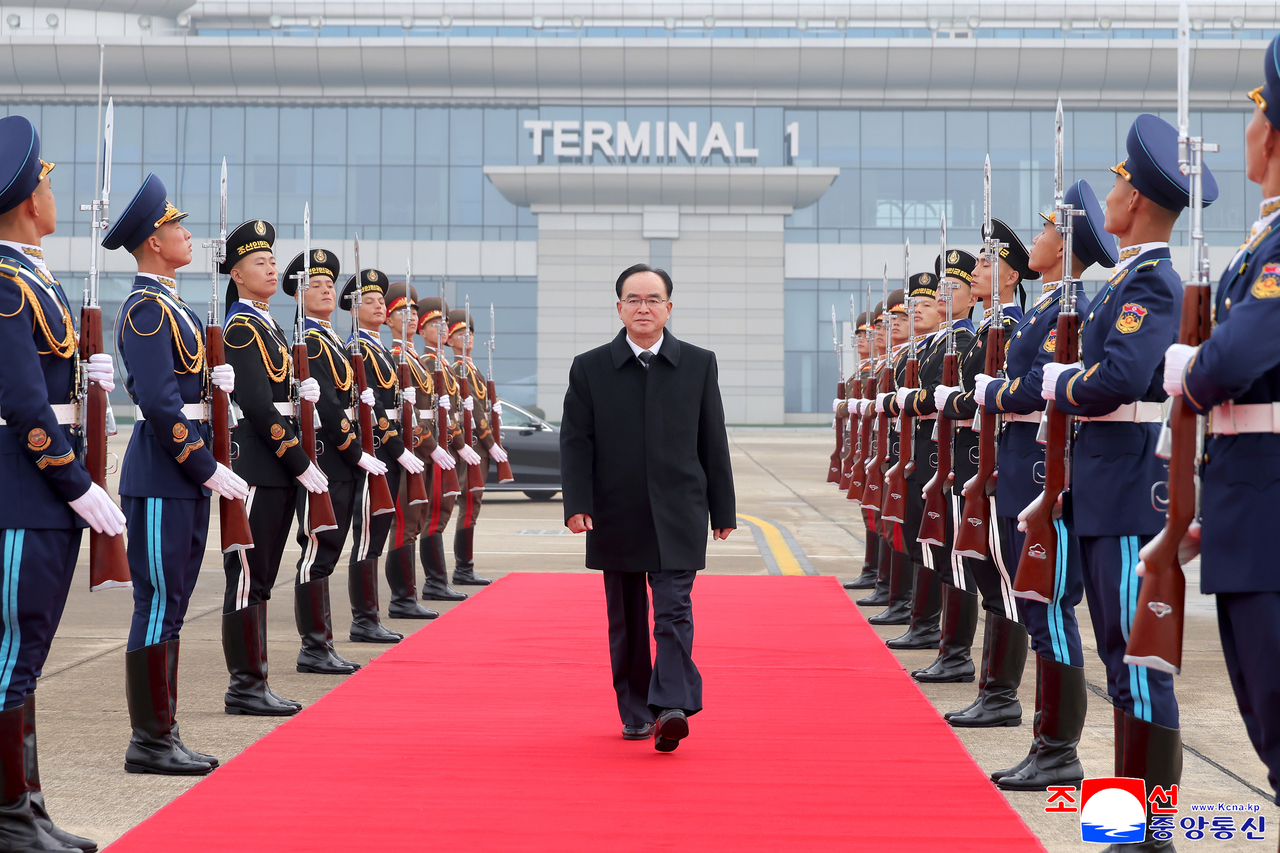
The top aide to North Korean leader Kim Jong-un arrived in Russia Saturday ahead of a historic three-way summit between the leaders of the United States, China and Russia.
His arrival has raised concerns in Seoul that Pyongyang could seek recognition of its nuclear status while South Korea is sidelined from discussions affecting its security.
Jo Yong-won, a member of the Presidium of North Korea's top decision-making body, the Political Bureau, and secretary of the Central Committee of the Workers' Party of Korea, arrived in Moscow leading a party and government delegation at the invitation of Dmitry Medvedev, chairman of Russia's ruling United Russia party, according to the Korean Central News Agency on Sunday.
Jo is considered one of Kim's closest confidants, having accompanied the North Korean leader on major overseas trips, including his summits with US President Donald Trump in Singapore in 2018 and Hanoi in 2019.
The visit comes days before the planned meeting of US President Donald Trump, Chinese President Xi Jinping and Russian President Vladimir Putin on the sidelines of the Asia-Pacific Economic Cooperation summit in Shenzhen, China, on Thursday.
For Pyongyang, the gathering could offer an opportunity to advance its long-standing demand for recognition as a nuclear weapons state, bringing together Trump, who has repeatedly expressed willingness to meet Kim; Xi, whose country remains North Korea's main economic lifeline; and Putin, with whom Kim has forged a military alliance.
Experts, meanwhile, suggest that Jo could be carrying a personal message from Kim to Putin ahead of the trilateral meeting.
Lim Eul-chul, a professor at Kyungnam University's Institute for Far Eastern Studies, said Jo was expected to "effectively serve as a special envoy conveying Kim Jong-un's message to President Putin."
Lim described the visit as a form of "indirect strategic communication" aimed at understanding Trump's plans toward Russia and North Korea, as well as Putin's negotiating strategy.
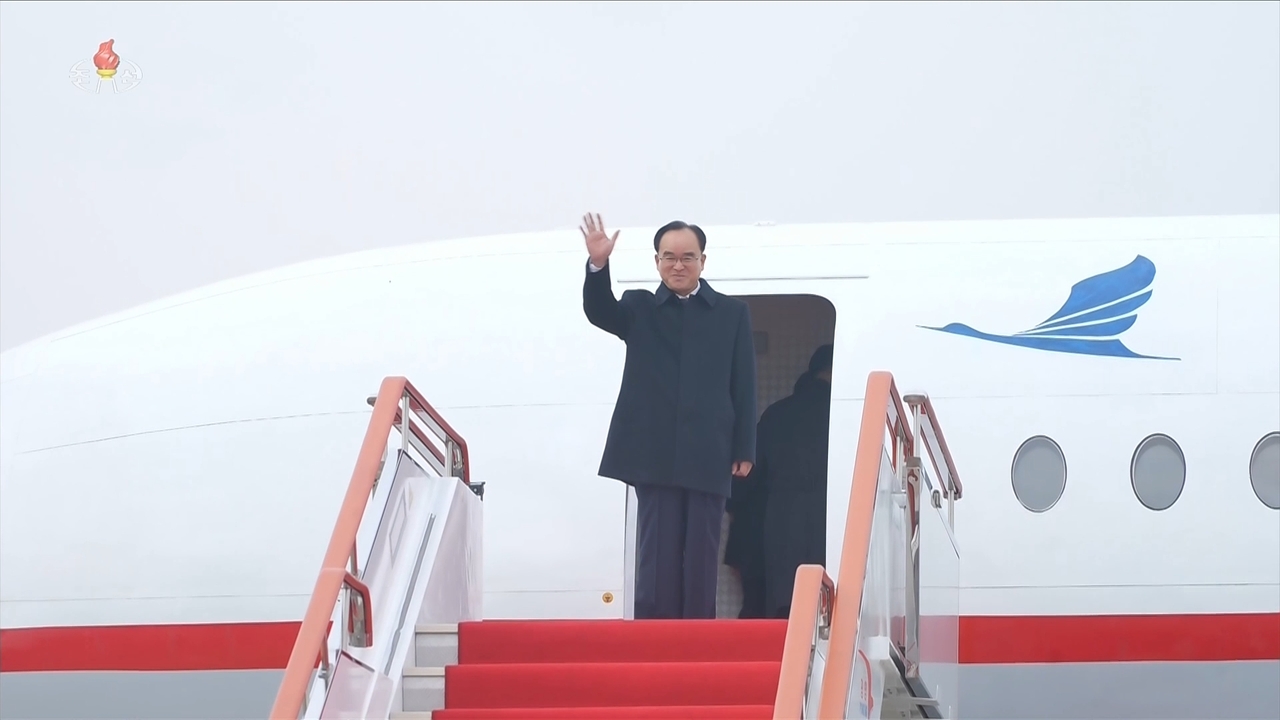
Yang Moo-jin, a professor at the University of North Korean Studies, said photographs released by North Korean media showed that Kim Hyong-sik, vice chairman of the Supreme People's Assembly, and Vice Foreign Minister Kim Jong-gyu, who handles Russian affairs, accompanied Jo.
"A large delegation of senior party and government officials appears to have accompanied him, and the possibility that military officials were included cannot be ruled out," Yang said, noting that a senior party official overseeing military affairs attended Jo's departure ceremony.
Yang also suggested that Jo may have been carrying a personal letter from Kim, given the unusually high-profile send-off.
"They could discuss developments surrounding the US-China-Russia summit and North Korea-US dialogue, as well as a possible North Korea-Russia summit in the first half of next year," Yang said.
Lim also pointed to North Korean Foreign Minister Choe Son-hui's visit to Russia in July and a Russian deputy foreign minister's invitation for Kim to visit in September as signs of deepening diplomatic exchanges between Pyongyang and Moscow.
"Kim Jong-un could also make a surprise visit to Russia, depending on the outcome of the trilateral summit," Lim said.
Meanwhile, for Seoul, the prospect raises concerns that major powers could discuss North Korea's nuclear program without South Korea's participation.
Foreign Minister Cho Hyun said he had earlier conveyed such concerns to Chinese Foreign Minister Wang Yi during talks in Beijing Friday.
"We emphasized that, as a directly concerned party in maintaining peace on the Korean Peninsula, issues concerning the peninsula are a matter of vital interest to us," Cho told South Korean reporters at a press briefing in Beijing Saturday.
Cho also said that Wang agreed that peace and stability on the Korean Peninsula also served China's interests.
flylikekite@heraldcorp.com